

Written By Abraham Mande
As a public affairs analyst who has followed governance debates and political campaigns in Benue State for many years, I have come to appreciate one fundamental truth: the quality of leadership is often reflected in a leader’s understanding of society’s problems and the practicality of the solutions he proposes. Campaign promises are abundant in every election cycle, but coherent ideas that connect challenges to solutions are far less common.
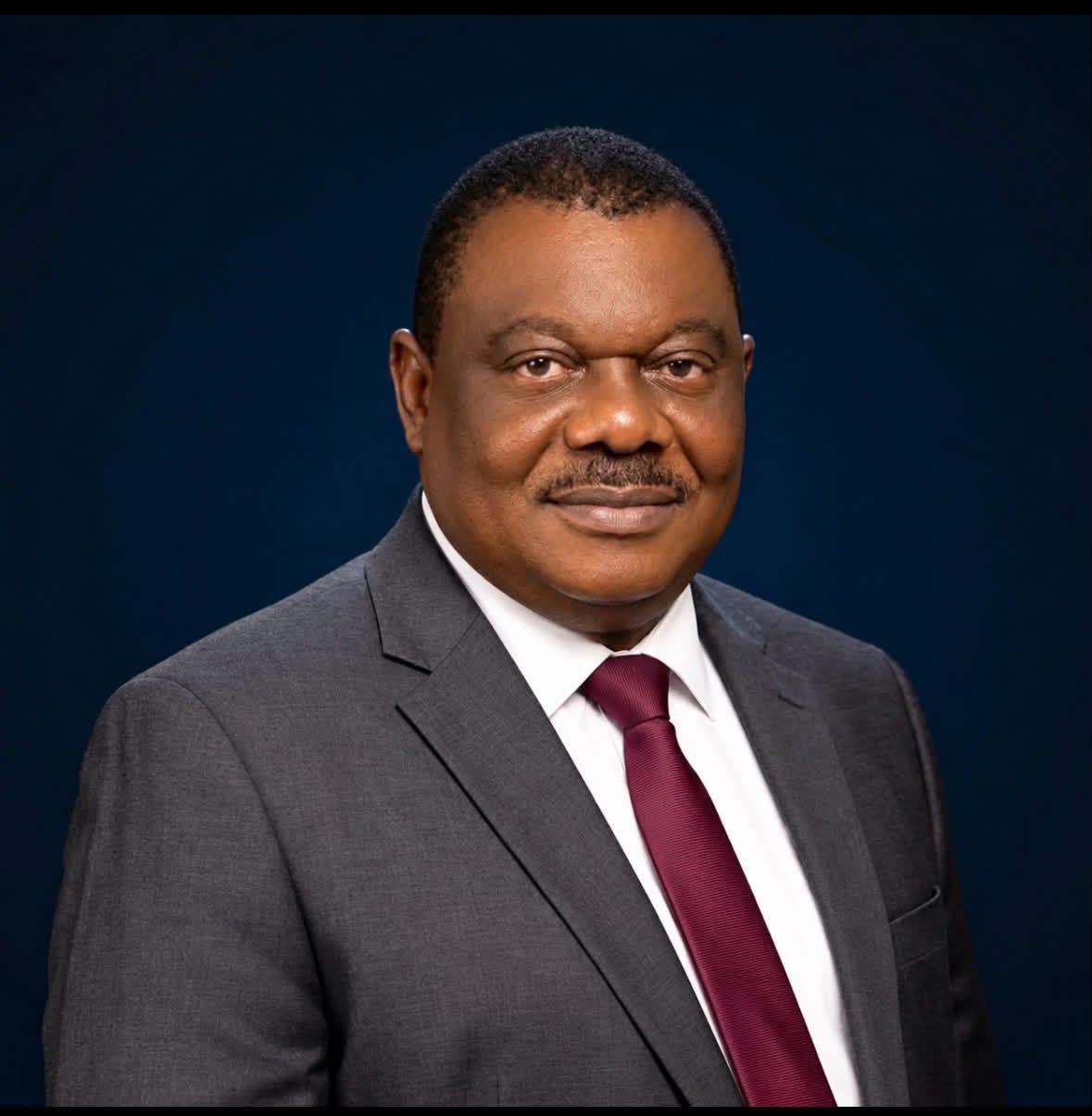
It is from this standpoint that I have paid close attention to the public statements and policy direction of the Peoples Democratic Party (PDP) governorship candidate, Chief Michael Kaase Aondoakaa, SAN.
What has particularly attracted my interest is that his emerging development agenda, aptly captured in the slogan, “Benue First: Security. Farms. Jobs. Future,” is not a collection of isolated promises. Rather, it is built around a clear diagnosis of Benue’s most pressing challenges and an attempt to establish a logical pathway towards recovery and growth.
For years, Benue has faced a painful reality. Communities have been displaced by terrorists. Farmers have been forced away from their ancestral lands. Agricultural productivity has suffered. Businesses have struggled. Youth unemployment has increased. Poverty has deepened. Rural communities have watched development pass them by.
The consequence is that a state blessed with enormous agricultural potential has been prevented from fully realizing its promise.
What I find noteworthy about Aondoakaa’s approach is his recognition that security is not merely a law enforcement issue; it is the foundation upon which every other aspect of development rests.
His repeated emphasis on restoring peace, strengthening community-based security structures, improving intelligence gathering, enhancing collaboration among security agencies and sustaining the Open Grazing Prohibition and Ranches Establishment Law demonstrates an understanding that without security, economic development remains impossible.
This is perhaps the most compelling aspect of his thinking. He does not discuss security in isolation. He connects it directly to economic recovery.
The logic is straightforward.
When communities become safe, displaced persons return home.
When people return home, farms reopen.
When farms reopen, agricultural production increases.
When agricultural production increases, jobs are created, incomes rise and local economies begin to recover.
In other words, security becomes the catalyst for prosperity.
This appreciation of the relationship between peace and economic growth suggests a candidate who understands both the causes of Benue’s present difficulties and the conditions necessary for sustainable development.
Equally significant is his vision for agriculture.
Benue’s identity as Nigeria’s Food Basket was not created by accident. It was built on fertile land, hardworking farmers and abundant agricultural potential. Yet, insecurity and inadequate investment have weakened that advantage.
Aondoakaa’s proposal to reopen farming communities, attract private-sector investment, develop agricultural value chains and promote agro-processing industries indicates a desire to move agriculture beyond subsistence production and transform it into a major driver of industrial growth and wealth creation.
This is important because the future of agriculture is not simply about producing more food; it is about creating value, generating employment and building industries around agricultural production.
The strongest economies are those that convert their natural advantages into economic opportunities. Benue’s greatest natural advantage is agriculture. Aondoakaa appears determined to make that advantage work for the people.
His economic vision extends beyond farming.
At a time when unemployment remains one of the greatest concerns among young people, his commitment to creating at least 100,000 jobs annually reflects an understanding of the urgency of the challenge. More importantly, he identifies the private sector as the engine through which such opportunities can emerge.
Rather than portraying government as the employer of last resort, he advocates a model in which government creates an enabling environment for businesses to thrive in agriculture, manufacturing, construction, technology, services and small-scale enterprises.
That approach reflects an important economic reality. Governments do not create prosperity by employing everyone. Prosperity is created when businesses expand, investments increase and productive economic activities flourish.
This same philosophy is evident in his approach to youth development.
One of the persistent challenges in Nigerian politics is the tendency to view young people as political tools rather than economic assets. Aondoakaa’s emphasis on entrepreneurship, vocational training, apprenticeship programmes and support for youth-led enterprises suggests a different perspective.
He speaks about creating opportunities rather than dependence.
He speaks about productivity rather than patronage.
He speaks about enterprise rather than entitlement.
If effectively implemented, such an approach could help redirect youthful energy toward innovation, business creation and self-reliance.
His proposals regarding cooperatives and access to finance are equally strategic.
Across Benue State, thousands of farmers, artisans, traders, transport operators and small business owners possess the willingness to work but lack the capital needed to grow. Access to financing remains one of the greatest barriers to economic advancement.
By proposing stronger cooperative structures as vehicles for grassroots economic growth, Aondoakaa is addressing a challenge that directly affects ordinary citizens. Economic inclusion cannot be achieved if opportunities remain inaccessible to those at the grassroots.
His education policy demonstrates a similar understanding of social realities.
The proposed ₦2 billion annual scholarship and student support programme recognizes a painful truth: many talented young people are denied educational opportunities not because they lack ability but because they lack financial means.
A society that abandons its brightest minds because of poverty ultimately weakens its own future.
By supporting indigent students while expanding skills and technical education, the blueprint places human capital development at the centre of governance. This is significant because no society can achieve lasting progress without investing in its people.
Another aspect that deserves attention is healthcare.
For many years, discussions about healthcare have often focused exclusively on infrastructure. Aondoakaa introduces an additional dimension by drawing attention to the welfare of elderly citizens, one of the most overlooked segments of society.
His proposal for specialized healthcare services and support programmes for senior citizens reflects an understanding that development should not only create opportunities for the young but also provide dignity and care for those who have spent their lives contributing to society.
His advocacy for local government autonomy is equally important.
Development becomes meaningful when citizens can see its impact in their immediate communities. By proposing greater autonomy for local councils and strengthening their capacity to deliver services in healthcare, education, agriculture and rural development, he appears committed to bringing governance closer to the people.
The emphasis on rural infrastructure reinforces this objective.
For too long, many rural communities have remained disconnected from opportunities because of poor roads, inadequate electricity and limited access to essential services. A development strategy that prioritizes rural roads, water supply, electricity and equitable project distribution recognizes that prosperity cannot be confined to urban centres alone.
Perhaps most importantly, the recurring themes of accountability, accessibility and inclusion run throughout the Benue First agenda.
Aondoakaa consistently speaks about citizen engagement, transparent leadership, measurable performance standards and governance without discrimination. These are not merely administrative concepts; they are the principles upon which public trust is built.
When viewed as a whole, the blueprint reveals a coherent development philosophy.
Restore security.
Reopen farms.
Revive agriculture.
Create jobs.
Empower youths.
Support businesses.
Invest in education.
Strengthen healthcare.
Empower local governments.
Expand rural infrastructure.
Promote accountability.
Build inclusion.
The strength of the Benue First agenda lies not simply in the promises it contains but in the way those promises connect to one another.
Whether every objective can be fully achieved is a matter that history and governance will ultimately judge. However, based on the ideas he has articulated so far, Chief Michael Kaase Aondoakaa, SAN, has demonstrated a substantial understanding of the challenges confronting Benue State and has presented a development framework that seeks to address those challenges in a structured and interconnected manner.
As political conversations ahead of 2027 continue to evolve, it is important that public discourse remains focused on ideas, policies and practical pathways to development. Judged from that standpoint, the Benue First agenda has undoubtedly added a serious and substantive contribution to the debate about the future of Benue State.
— Mande is a Public Affairs Analyst